

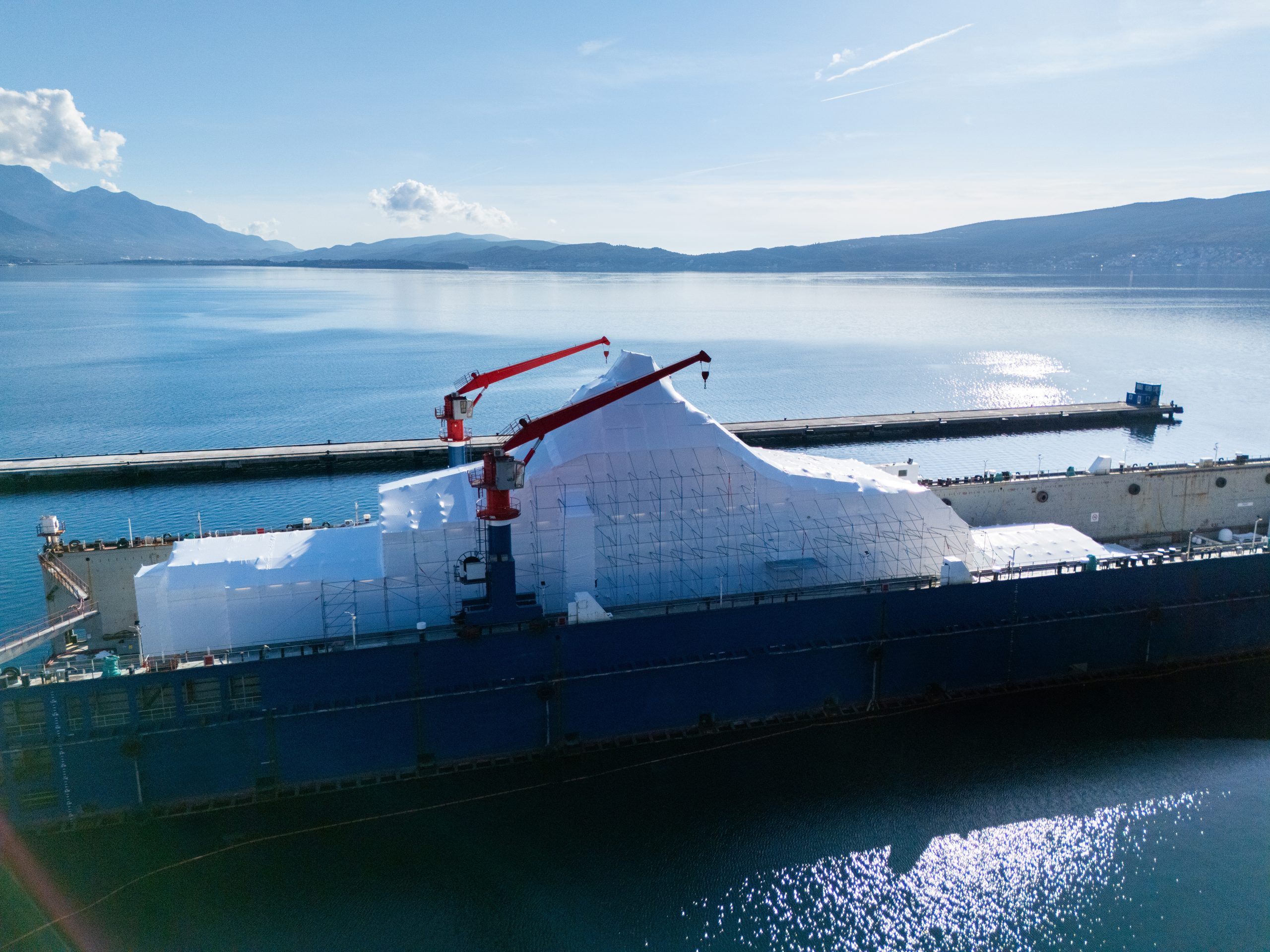
Built In, Not Bolted On: Security Belongs at the Concept Stage
Why involving a security consultant at concept stage saves owners far more than it costs.
A yacht’s keel is laid years before her owner ever steps aboard. By the time launch day arrives, many of the decisions that will govern her security for the next two decades have already been made, in a design office, months before a security consultant was ever invited into the room.
That sequencing is starting to change. Across the major European yards, security is edging toward the naval architect’s table at the concept stage rather than arriving as a bolt-on once the general arrangement is fixed. It is a shift with real implications for owners, project managers, and the consultants they hire to keep them safe.
The Cost of Arriving Late
Retrofitting a citadel into a yacht that has already been framed is a different exercise from designing one in from the start. A citadel, or safe room, needs ballistic walls, an independent communications link, and overriding access to navigation and satellite systems, so guests inside retain a route to help even if the bridge does not. Placed correctly at the general arrangement stage, it costs little more than careful zoning. Placed after delivery, it can mean cutting into structural bulkheads, rerouting cabling, and absorbing weeks of yard time an owner’s schedule was never built to accommodate.
The same logic applies below decks. Segmenting owner, guest, crew and navigation networks from one another, so that a compromised entertainment system cannot reach the bridge, is straightforward when the electrical engineer is drawing the architecture from scratch. It is considerably harder once the wiring is already in the walls.
Zoning as a Security Discipline
Security consultants now working at concept stage describe their role less as guarding a finished vessel and more as shaping how people move through it: principal, family, guests and crew alike. Egress routes from the owner’s quarters, sightlines between bridge and tender garage, and the separation of crew and guest circulation are all decisions made on paper long before steel is cut. Each one either supports or undermines a security posture that has to hold for the vessel’s operational life.
This is where a layered approach earns its keep. Those elements are planned against the same general arrangement drawing the interior designer is working from, so that form and protection are resolved together rather than negotiated after the fact.
The Tension With Design Intent
Security and interior design do not always want the same thing from the same square metre. An interior designer wants unbroken sightlines across a saloon and glass that all but disappears into the hull. A security consultant wants camera coverage of that same space, controlled sightlines onto tender garages and swim platforms, and hardware that does not announce itself to a guest enjoying the view. Neither party is wrong. The friction between the two is best resolved on paper, at concept stage, where a compromise, angled glazing that still permits discreet camera placement, joinery that conceals rather than exposes an access point, costs a design revision rather than a structural one.
Yards that manage this well tend to treat the interior designer and the security consultant as two parties working from the same brief, rather than competing priorities to be reconciled later. The result, when it works, is a vessel where the protection is largely invisible to anyone standing in the room, which is close to the actual point of good superyacht security: effective without announcing itself to guests who did not come aboard to think about threat mitigation.
Cyber From the Keel Up
The same principle extends to a yacht’s operational technology. Modern superyachts run navigation, propulsion and safety systems alongside owner and guest connectivity on infrastructure that, if poorly segmented, exposes OT systems to the same risks as any other networked environment. Building that separation into the design phase, rather than patching it in after commissioning, is now treated by the more capable yards as a baseline requirement rather than an option.
Bringing the Right People to the Table Early
In practice, this means involving a security consultant at the same point an owner’s project manager brings in the naval architect, the exterior stylist and the flag state surveyor, typically during concept design, well before a shipyard contract is signed. A short risk assessment at this stage, covering the owner’s likely cruising grounds, guest profile and public visibility, gives the design team a brief to build against, rather than a checklist to retrofit against later. It is a modest addition to a concept phase that already involves a dozen specialists, and it is considerably cheaper than discovering the gap once the vessel is afloat.
An owner commissioning a new build, or planning a significant refit, does not need to become fluent in security architecture to get this right. The one question worth asking before the general arrangement is signed off is whether security has had a seat at the table alongside the naval architect, the interior designer and the flag state compliance team.
The saving here is not really financial, even though the financial case is real enough on its own. It is the difference between a yacht whose protection was designed around how her owner actually intends to live aboard her, and one where protection was fitted, at cost and under time pressure, around decisions that were never made with security in mind. The first kind tends not to make headlines. In this line of work, that quietly counts as success.
Intelligence-led. Vetted. Proportionate.
If you are commissioning a new build or planning a major refit and would like an independent security assessment built into the design process, contact our team at enquiries@priavosecurity.com