

Maritime Incident Report: July 2026
Executive Summary
Our monthly Maritime Incident Report: July 2026 covers maritime security and incidents throughout the Indian Ocean, Europe, West Africa, South East Asia and South America for the period 01/07/26 – 31/07/26.
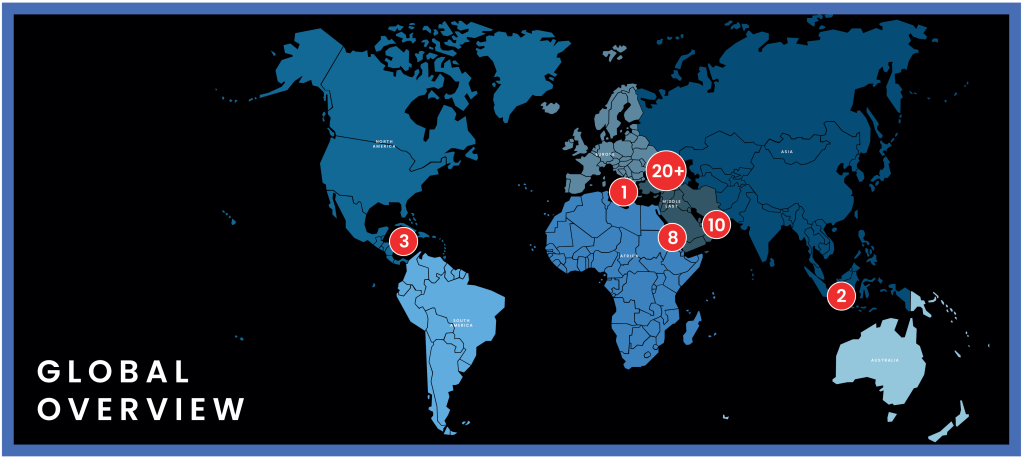
• Europe. Maritime security deteriorated significantly as Russian and Ukrainian forces intensified attacks against commercial shipping in the Black Sea and sea of Azov. Ukraine carried out several attacks on Russian shadow fleet vessels using drones and damaging multiple merchant vessels bound for Russian ports. Russia responded with attacks on vessels using the Ukrainian maritime corridor and approaching ports near Odesa. Two LNG vessels were struck were damaged during an attack on Damietta LNG terminal in Egypt.
• The Red Sea and the Gulf of Aden. Houthi forces declared a maritime embargo against Saudi Arabia following an alleged Saudi attack on Sanaa airport. The Houthis enforced the embargo carrying out drone and missile strikes on Saudi energy hubs and Saudi affiliated tankers in the Red Sea. Somali pirate activity continued in the Gulf of Aden where a Tanzanian-flagged tanker was hijacked. Lloyd’s Joint War Risk committee extended the war risk area northwards in the Red Sea.
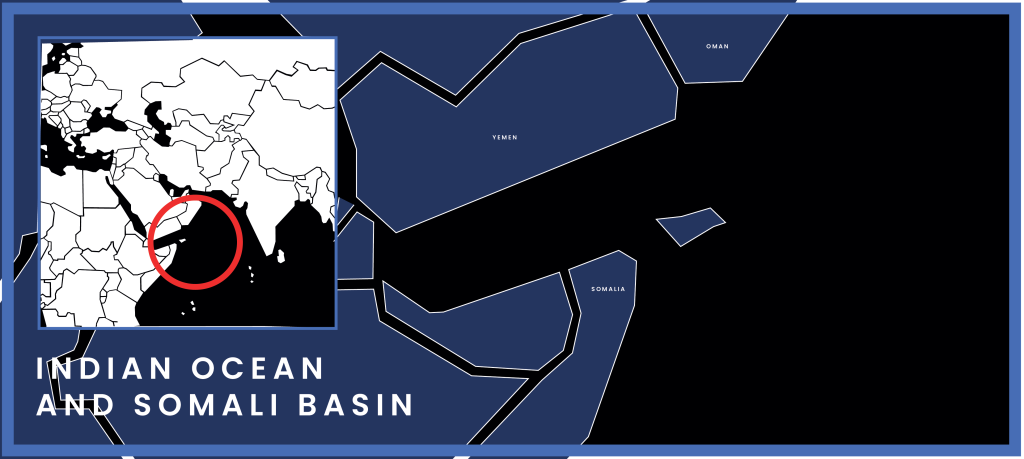
• The Indian Ocean and Somali Basin. The Southwest Monsoon season is affecting the region and keeping small boat activity confined to coastal waters, but the threat from Somali piracy remains. At least three vessels hijacked since April 2026 remain under pirate control.
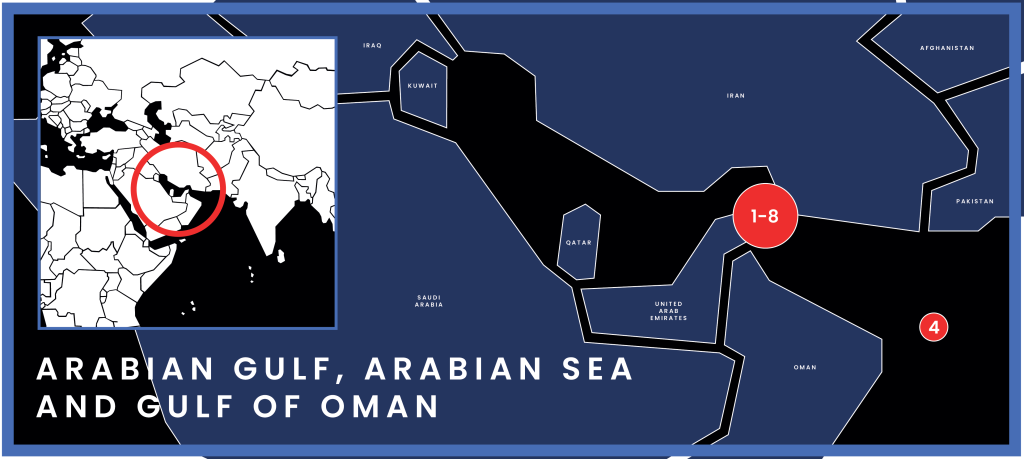
• The Arabian Gulf and the Gulf of Oman. Multiple merchant vessels were struck or damaged by projectiles, explosions and military activity in the Strait of Hormuz and its approaches. The Strait effectively operated under selective Iranian transit control, resulting in a sharp reduction in vessel movements. The US naval blockade of Iranian ports remained in force.
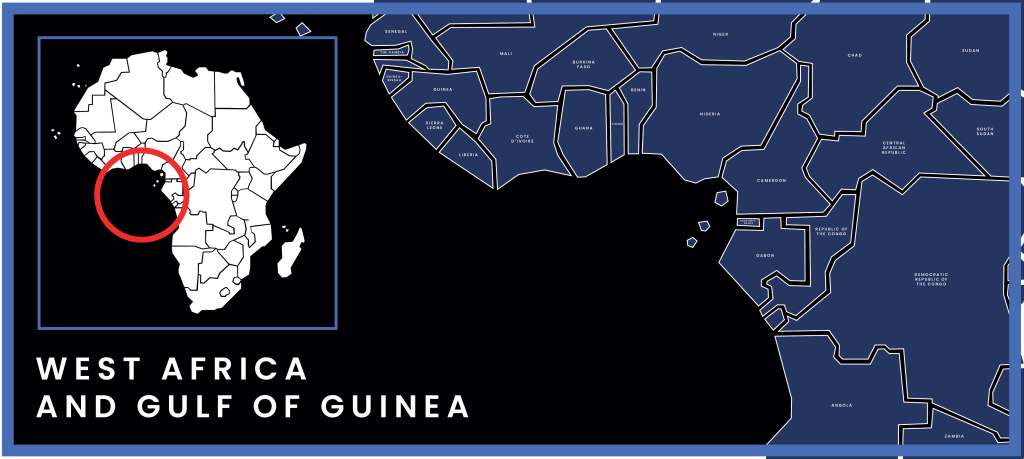
• West Africa and the Gulf of Guinea. The Gulf of Guinea remained a moderate risk maritime security environment during July with events continuing at historically lower levels.
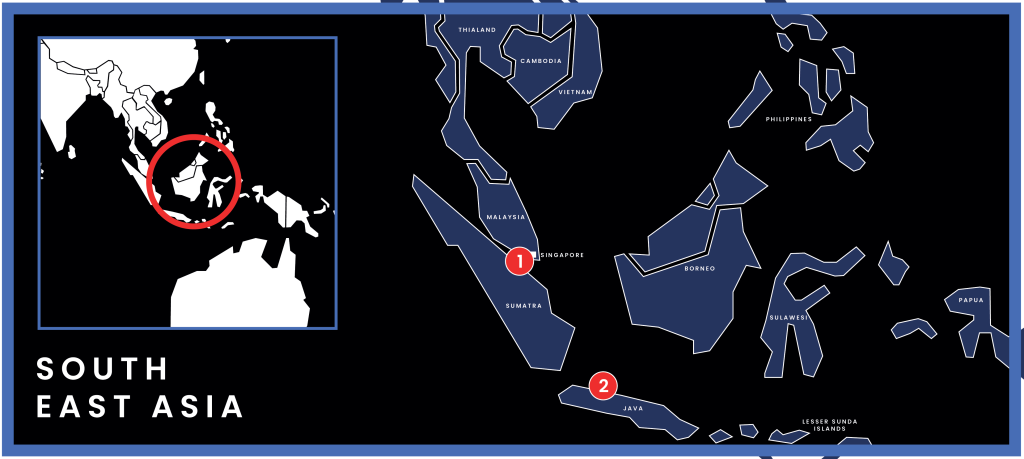
• Southeast Asia and the South China Sea. Opportunistic criminal activity against vessels at anchor and underway remain a concern, particularly in the Singapore Strait.
• Latin America and the Caribbean Sea. Petty theft, robbery and criminal activity were reported against vessels at anchor and in ports across parts of the Caribbean basin.
1. Regional Report: Europe
Monthly Activity
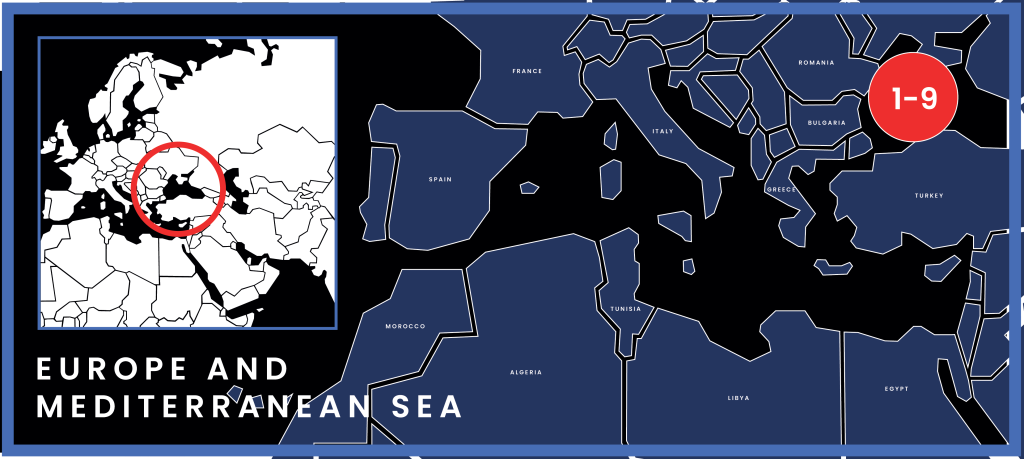
Overall, the Black Sea remained Europe’s highest-risk maritime operating environment during July, with commercial shipping exposed to direct military action, navigational hazards and rapidly changing operational conditions. Ukraine intensified its campaign against Russian military and energy infrastructure, in which it claimed to have struck at least 183 Russian “shadow fleet” vessels operating in the Sea of Azov and the Black Sea as part of Operation MOLOCHKA, which began on 6 July employing long-range UAVs and uncrewed surface vessels (USVs) against ports, commercial vessels and naval assets. Russia responded with missile and drone strikes against Ukrainian ports, merchant vessels and logistics infrastructure supporting the Black Sea grain corridor. Several foreign-flagged commercial ships sustained damage during attacks on ports and while transiting to and from Odesa and the Danube, resulting in casualties among merchant seafarers and periodic suspension of port operations. Sanctions enforcement against Russia’s shadow fleet intensified across European waters, with additional vessel detentions, inspections and restrictions imposed by European states.
Maritime Incidents
1. The Black Sea. 6 July 2026 – UAV Attack:
When transiting from Taganrog Port to the Crimea Peninsula in the Azov Sea, two Russian Project 15781-class tankers, including KAPITAN BARMIN, were reportedly struck by Ukrainian UAVs. According to Ukrainian sources, both vessels were carrying approximately 7,000 tonnes of fuel.
2. The Black Sea. 7 July 2026 – UAV Attack:
While anchored at Taganrog Anchorage in the Azov Sea, seven Russian tankers—VERENA 3, SANA 1, SANA 17, KLYMENA, TETI, ALEXEY SAVRASOV, and PENELOPE and one unidentified cargo vessel were reportedly struck by Ukrainian UAVs. Ukrainian sources claimed the tankers were badly damaged and on fire.
3. The Black Sea. 7 July 2026 – UAV Attack:
Ukrainian forces conducted a UAV attack against Kerch Port and terminal. According to Ukrainian sources, an unidentified ferry was hit during the strike. Kerch Port and terminal had also been attacked the previous night, while ferry ELENA II was previously struck in Kerch Port on 20 June 2026.
4. The Black Sea. 8 July 2026 – Vessels Attacked:
While located approximately 10nm south of Yalta, Black Sea, the tanker BLUE was reportedly struck by a USV. The extent of the damage has not been reported. No further information on casualties or pollution is currently available.
5. The Black Sea. 14 July 2026 – USV Attack:
Russian forces reportedly conducted a UAV strike against two cargo vessels operating in the north-western Black Sea, off Odesa, Ukraine, in the vicinity of 46°28’N, 030°45’E (approx.).Both unnamed vessels were reportedly hit. The extent of damage, casualties and any resulting pollution have not been independently verified.
6. The Black Sea. 20 July 2026 – Vessel Attacked:
When transiting, approximately 20 nm southeast of Sfântu Gheorghe, Romania, the LPG tanker, GAS LISBON, was struck by an unknown projectile, causing significant damage and a fire in the vessel’s superstructure. The Liberia-flagged tanker was carrying approximately 3,790 tonnes of propane from Alexandria, Egypt, to Reni, Ukraine. All 17 crew members were evacuated by Romanian search and rescue vessels, with three injured seafarers hospitalised. A tug was deployed to secure the tanker and prevent it from drifting and posing a hazard to navigation. Romanian authorities are investigating the incident. , which was assessed as likely connected to the ongoing Russia–Ukraine conflict.
7. The Black Sea. 27 July 2026 – UAV Attacks:
While berthed at Mykolaiv Port, Ukraine, three unidentified cargo vessels, were reportedly struck by Russian UAVs. Russia’s Ministry of Defence claimed that two dry cargo vessels were hit while unloading, while local authorities reported damage to three vessels. One person was killed and several others were injured during the attack.
8. The Black Sea. 30 July 2026 – UAV attack:
Russian forces reportedly conducted UAV strikes against three unnamed cargo vessel in the northwestern Black Sea. One vessel was reportedly struck while berthed at Yuzhnyi Port. Two additional vessels, located south and east of Odesa, were also reportedly targeted. According to Russian authorities, the vessels had transported arms and military equipment to the Ukrainian ports of Odesa, Chornomorsk and Yuzhnyi. Damage and casualty details remain unknown.
9. The Black Sea. 30 July 2026 – USV Attack:
When operating near the Caspian Pipeline Consortium (CPC) offshore terminal, Novorossiysk, Black Sea, two tankers, MARATHI (IMO:9772357) and NISSOS SIFNOS (IMO:9884045), were reportedly struck by UAVs. NISSOS SIFNOS was loading crude oil at Single Point Mooring 1 (SPM-1) when struck, causing a fire near the cargo manifold. The crew, assisted by three CPC support vessels, extinguished the fire. MARATHI was reportedly struck approximately 6 nm from the terminal while approaching to load crude oil. No casualties or pollution were reported. The extent of damage remains unknown. Two other tankers, ASIA and NISSOS DELOS, were reportedly struck in the same area on 19th July 2026.
10. The Mediterranean Sea. 29 July 2026 – UAV attacks:
While berthed at the LNG terminal in Damietta Port, Egypt, gas storage vessel ENERGOS WINTER was reportedly struck by an unmanned aerial vehicle during cargo operations, causing a fire which spread to LNG carrier GASLOG SALEM. Crews were evacuated and the fire was brought under control. Other vessels were subsequently evacuated from the port. The reported strike has not been officially confirmed.
Operational Status of Ukraine’s Black Sea Ports
•The Danube ports of Reni, Izmail and Ust-Dunaisk are open with some restrictions.
• Belgorod Dniestrovskiy is open with some restrictions.
• Odesa Port is open.
• Skadovsk port is closed.
• Chornomorsk is reported to be open. Grain export only.
• Yuzhny/Pivdennyi is open.
• The port of Berdyansk is closed.
• Mykolaiv (Olvia) Port is closed. Cargo operations are suspended for commercial operations.
• Mariupol Port is closed. The city is controlled by Russian forces, and the port is reported by the Russian military to be operational but it remains closed according to Ukraine’s Maritime Administration.
• Kherson Port is closed. Cargo operations are suspended for commercial operations.
2. Regional Report: The Red Sea and Gulf Of Aden
Monthly Activity
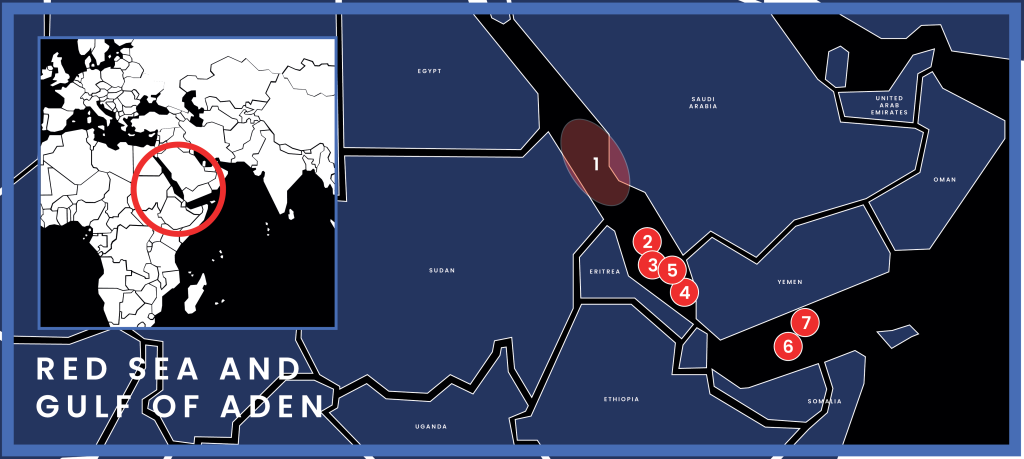
On 20 July, the Yemen Houthis declared a maritime embargo on Saudi Red Sea ports and attacked the Saudi-linked tankers ENCELIA, LAYLA and NCC GHAZAL, they also conducted missile and UAV strikes against Saudi Aramco facilities at Yanbu and Jizan, and continued threatening commercial shipping throughout the Red Sea and Bab el-Mandeb Strait. Ship operators diverted vessels away from the Babe el Mandeb and the London based, Joint War Committee (JWC) expanded the Red Sea high-risk Listed Area (JWCLA) northward. Issued under circular JWLA-034, the new boundary line has been shifted north of Latitude 25.5°N. In the GOA, pirate activity attributed to Somali Pirate Action Groups (PAGs) continued with multiple armed attacks, suspicious approaches and attempted boardings reported against merchant vessels including the successful hijacking of the chemical tanker MT ASANA.
Maritime Incidents
1. The Red Sea. Area of Electronic Interference.
2. The Red Sea. 22 July 2026 – Vessel Attacked:
While transiting approximately 70 nm southwest of Al Shuqaiq, Saudi Arabia, the tanker ENCELIA was struck by an unknown projectile, causing a fire onboard. The crew were engaged in firefighting operations. No casualties or environmental impact were reported. Authorities are investigating.
3. The Red Sea. 24 July 2026 – Suspicious Incident:
When transiting in the southern Red Sea, a Saudi Arabia-flagged tanker, name not reported, saw a splash in the vessel’s vicinity. The vessel and crew were reported safe.
4. The Red Sea. 27 July 2026 – Suspicious Incident:
While transiting the southern Red Sea, the Master of a tanker reported hearing an explosion. The vessel and crew are safe, with no environmental impact reported.
5. The Red Sea. 28 July 2026 – Unconfirmed Attack:
While transiting the Red Sea at an unknown location, Saudi-flagged tanker NCC GHAZAL was reportedly targeted by Houthi forces using anti-ship ballistic missiles. A Houthi spokesperson claimed that the vessel was struck and turned back; however, the impact has not been independently confirmed. The tanker’s AIS signal was last recorded on 23rd July 2026 at Yanbu, Saudi Arabia
6. The Gulf of Aden. 1 July 2026 – Vessel Attack. Shots Fired:
While transiting approximately 76 nm south of Balhaf, Yemen, a vessel reported being approached by multiple small craft with several armed persons onboard. The crew mustered in the citadel and remained safe. A nearby vessel reported possible small arms fire, which remains unconfirmed. UKMTO later reported that the suspicious small craft had departed from the vessel but remained active in the area and could possibly be a risk to other vessels. Ther CSO reported that the vessel has minor damage on the bridge and confirms one suspicious small craft with 4 POB, armed with RPG was involved. UKMTO updated and reclassified as an illegal boarding. The Master has further reported that the unauthorised personnel caused damage to the bridge and several adjacent compartments. The crew remain secure in the citadel and were reported as safe.
7. The Gulf of Aden. 17 July 2026 – Vessel Hijacked:
A merchant vessel MT ASANA which was transiting east in the Gulf of Aden was boarded by unauthorised personnel approximately 65 nm south of Al Mukalla, Yemen. Military authorities reported the incident, and investigations are ongoing. Further details concerning the crew, vessel status or perpetrators have not been reported. Subsequent reported stated that one person was observed near the vessel’s bridge and that the tanker was proceeding slowly southeast towards Somalia. Yemeni authorities were coordinating with international partners and maritime agencies to verify the vessel’s status and monitor its movements.
3. Regional Report: The Indian Ocean and Somali Basin
Monthly Activity
Although the southwest monsoon reduced the ability of pirates to conduct long-range offshore attacks, the potential for pirate activity persists in coastal waters. Coalition naval forces, UKMTO and MSCIO continue to issue security advisories and maintain a regional presence. Merchant vessels are advised to continue to employ BMP-MS counter-piracy guidance. Overall, the maritime security threat across the Indian Ocean and Somali Basin remains moderate risk. No further information was provided regarding the three vessels currently held by pirates in Somalia.
Maritime Incidents
No incidents to report.
4. Regional Report: The Arabian Gulf, Arabian Sea and Gulf of Oman
Monthly Activity
During July the Iran/US conflict continued to affect the maritime domain. Iran attacked several ships attempting to leave the Persian Gulf using the southern designated transit route in an attempt to assert control of the Strait and to coerce ships to use its northern, Iranian administered transit route. The United States maintained its naval blockade of Iranian ports while conducting repeated strikes against IRGC military infrastructure, prompting sustained Iranian missile, UAV and drone attacks against US and GCC military facilities and a significant increase in maritime security incidents. Transit numbers have fallen dramatically as many operators suspended voyages. Diplomatic efforts by Oman and regional states to establish a managed transit mechanism failed to restore confidence.
Significant Maritime Incidents
1. Gulf of Guinea. 6 July 2026 – Vessel Attacked:
While transiting the Strait of Hormuz in Omani waters, tanker WEDYAN was struck by an unknown projectile, causing a fire onboard. The attack reportedly occurred around the same time as the missile strike on tanker AL REKAYYAT. WEDYAN had departed Ras Tanura, Saudi Arabia on 3 July 2026, with AIS transmissions ceasing at 2040 UTC the same day.
2. Gulf of Guinea. 6 July 2026 – Vessel Attacked:
When transiting east of Limah in the Strait of Hormuz, Omani waters, the LNG tanker AL REKAYYAT was struck by a missile, causing a fire onboard. The crew reportedly abandoned the vessel, with no injuries reported. According to media reports, the Marshall Islands-flagged, Qatar-owned vessel was hit near the top of the engine room and remains at risk of explosion due to its LNG cargo. Reports also indicate another vessel may have been affected in the same attack.
3. Gulf of Guinea. 7 July 2026 – Vessel Attacked:
While transiting east of Limah in the Strait of Hormuz, Omani waters, a tanker was struck by an unidentified UAV, sustaining minor structural damage. No casualties or pollution were reported, and the vessel continued to its next port of call.
4. Gulf of Guinea. 14 Jul 2026 – Vessel Attacked:
A tanker transiting approximately 40 nm northeast of Qalhat, Oman, reported being struck by an unknown projectile on the starboard side engine room. All crew were reported safe and accounted for, with no pollution or environmental impact. The extent of the vessel’s damage remains under assessment.
5. Gulf of Guinea. 19 Jul 2026 – Vessel Attacked:
An unidentified tanker was reportedly struck by an unknown projectile while underway approximately 19 nm east of Khasab, Oman. The impact caused minor structural damage to the vessel’s port side. All crew were reported safe, and the tanker remained seaworthy and continued its transit.
6. Gulf of Guinea. 19 July 2026 – Vessel Attacked:
A vessel was reported on fire approximately 8 nm northwest of Kumzar, Oman. The cause of the fire was unverified. The CSO confirmed the vessel was struck by an unknown projectile. The crew safely abandoned the vessel and have been recovered by a tug boat. The fire has not been extinguished and the vessel is currently adrift. There is no reported environmental impact.
7. Gulf of Guinea. 24 July 2026 – Vessel Attacked:
When transiting in the western Gulf of Oman, the tanker, LAVINE, was fired upon and disabled by US forces. US CENTCOM reported that the Mozambique-flagged tanker had repeatedly ignored warnings and attempted to breach the US blockade on Iranian ports. US forces subsequently fired into the vessel’s engine room, disabling the tanker and preventing it from continuing towards Iran. No information concerning casualties was reported. The exact location of the incident remains unknown.
8. Gulf of Guinea. 31 July 2026 – Vessel Attacked:
When transiting approximately 11 nm east of Limah, Oman, the LNG carrier GASLOG SHANGHAI was struck by an unknown projectile. The projectile reportedly hit the port-side engine-room area, causing an explosion and fire, which the crew extinguished. The vessel subsequently suffered a blackout and loss of propulsion. No crewmembers were injured. The vessel’s AIS was reportedly not transmitting at the time of the incident.
5. Regional Report: West Africa and Gulf of Guinea
Monthly Activity
There were no maritime security incidents reported in the Gulf of Guinea for the second month in a row. In general, the maritime security environment across the Gulf of Guinea and West is experiencing historically lower levels of criminal activity compared to previous years, but the potential for maritime crime persists in coastal waters and offshore energy areas. The majority of recently reported incidents involved armed robbery against ships at anchor, theft of stores and equipment, illegal bunkering, oil theft, attacks on fishing vessels and opportunistic boardings within the territorial waters of Nigeria and the wider Niger Delta.
Maritime Incidents
No incidents to report.
6. Regional Report: South East Asia
Monthly Activity
Incidents in this region are characterised by persistent cases of vessel boardings and armed robbery, territorial tensions and heightened coast guard activity rather than high-intensity conflict. Armed robbery against ships at anchor and underway continued in the Singapore Strait and eastern approaches to the Strait of Malacca, with incidents involving boardings, reported theft of vessel spares and stores, although violence against crews remained limited. In the South China Sea, China maintained an extensive coast guard and maritime militia presence around disputed islands resulting in repeated confrontations with Philippine vessels conducting resupply and law enforcement missions.
Maritime Incidents
1. Singapore Strait. 5 July 2026 – Boarding and Theft:
When transiting the Malacca Strait prior to arrival in Singapore, the Singapore-flagged tanker PM CROWN reported a robbery. The Third Engineer discovered that the spare store had been disturbed. A subsequent inventory confirmed that two turbocharger service kits, two main bearing metal assemblies, one crankpin bearing metal and one piston ring set were missing. All crew were accounted for and safe. The incident was reported to the flag State.
2. Indonesia. 7 July 2026 – Boarding and Theft:
When anchored at Jakarta Anchorage Zone E, Indonesia, the Hong Kong-flagged bulk carrier COLUMBIA RIVER was boarded by two perpetrators. The perpetrators boarded from a small boat using a rope and hook via the poop deck port quarter. The alarm was raised and the perpetrators escaped with engine store spares. No injuries to the crew were reported.
6. Regional Report: South America and Caribbean
Monthly Activity
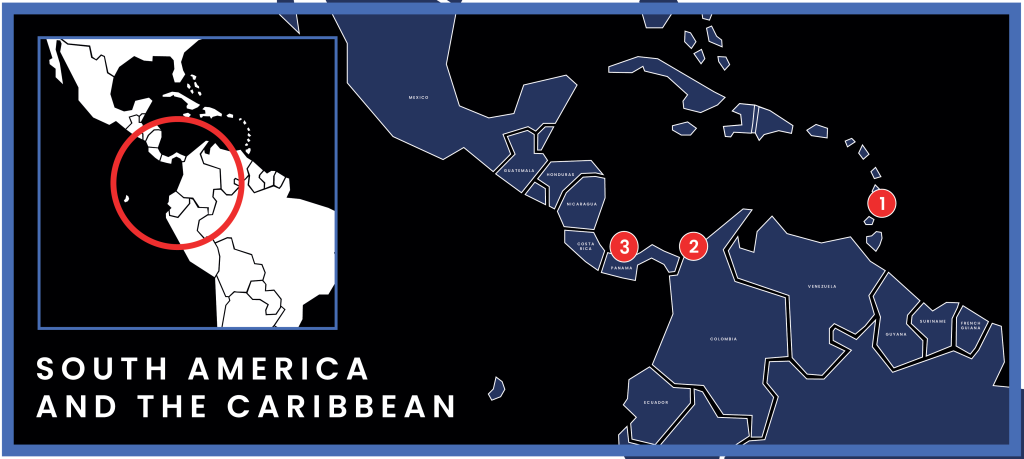
Narcotics trafficking and incidents of robbery against commercial and private vessels continue to be the primary threats in this region. Counter-narcotics operations by the United States, Caribbean and Latin American security forces have resulted in numerous interceptions of cocaine shipments, semi-submersible vessels and “go-fast” craft operating throughout the Caribbean Sea and eastern Pacific approaches. In the Caribbean, opportunistic theft, armed robbery and petty crime against vessels at anchor and in port remained the principal security concern. The Caribbean Safety and Security Network (CSSN) reported a significant reduction in the number of incidents involving robbery of pleasure craft and equipment across the Caribbean Sea in July. Only three events were reported which took place in St Lucia, Colombia and in Panama.
Maritime Incidents:
1. The Caribbean. 7 July 2026 – Theft (St Lucia):
Overnight while the owners slept onboard their yacht, a locked dinghy was stolen in Rodney Bay. The next morning, the police found the dinghy on the deck of a nearby yacht, and retrieved it (minus contents) from the thieves.
2. The Caribbean. 25 July 2026 – Theft (Colombia):
A power boat with 3 persons onboard stole several fuel jugs from the deck of an unoccupied motor yacht anchored in the bay Cartegena. Video of the theft was made by cruisers on a nearby yacht, and provided to the owner and authorities.
3. The Caribbean. 31 July 2026 – Theft (Panama):
Overnight a small panga with Suzuki 15HP (the motor is very rough looking, faded black with pink undertones showing through in various places) was stolen from an occupied yacht anchored in Almirante. The panga was recovered (minus the outboard) the next day. No police report was made.