

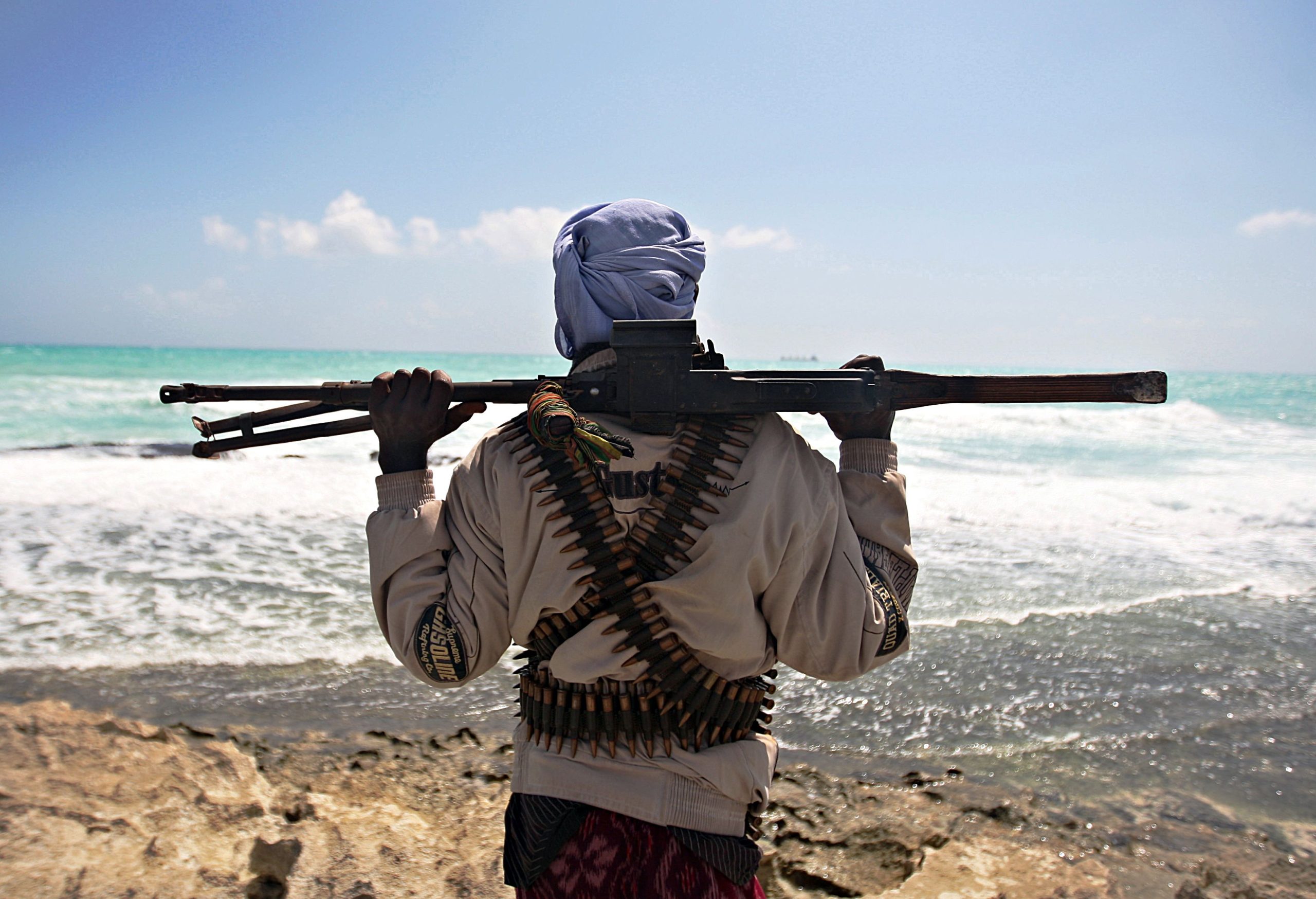
Somali Basin Piracy: Renewed Offshore Threat Following Tanker Boarding
After several years of relative calm, piracy in the western Indian Ocean has seen a sharp and concerning resurgence. Since late October, coordinated pirate groups have re-emerged off Somalia, operating from hijacked dhows repurposed as motherships to strike far from shore. These groups have demonstrated the capability and intent to use automatic weapons and RPGs against commercial shipping.
The most serious event so far occurred on 6 November 2025, when the tanker HELLAS APHRODITE (IMO 9722766) was boarded approximately 560 nautical miles southeast of Eyl. The 24 crew members successfully secured themselves in the citadel, while EU NAVFOR Atalanta assets, including ESPS Victoria, were dispatched to assist.
This incident confirms a clear pattern: pirates are again capable of launching complex, long-range attacks deep into the Somali Basin, at a time when regional naval forces remain focused on other security challenges in the Red Sea. Without sustained patrol coverage, further attempts are expected.
Recent Incidents (All Times UTC)
06 Nov 2025 – 0850
HELLAS APHRODITE (Malta-flag, IMO 9722766) boarded 560 nm SE of Eyl. Pirates fired small arms and RPGs before boarding. Crew in citadel; EU NAVFOR assets responding. No private security on board.
03 Nov 2025 – 0145
STOLT SAGALAND (Cayman Islands-flag, IMO 9352200) attacked 332 nm ESE of Mogadishu. Armed pirates fired on vessel but were repelled by evasive manoeuvres and return fire from an onboard security team. No injuries reported.
02 Nov 2025 – 1700
MV SPAR APUS (Norway-flag, IMO 9734989) approached by AIS-disabled craft 446 nm SE of Mogadishu. High-speed evasive action prevented boarding.
02 Nov 2025 – 1300
INTERTUNA TRES (Seychelles-flag, IMO 9202704) pursued by a high-speed skiff linked to mothership ISSA MOHAMAD 2. Attack aborted after crew alarm and manoeuvres.
28 Oct 2025 – 1633
Somali forces intercepted two suspicious dhows ~106 nm south of Eyl, near Garacad. One escaped capture—likely among those later used as motherships for offshore attacks.
Recent events show a clear shift in pirate capability and ambition. Hijacked dhows are once again serving as mobile bases, enabling attacks several hundred nautical miles offshore. Engagement ranges between 300 and 600 nm are now typical, with credible reports suggesting operational capacity as far as 1,000 nm from the Somali coast.
Weapons use—primarily RPGs and automatic rifles—reflects a return to tactics seen during the peak of Somali piracy a decade ago.
Compounding the threat, regional naval coverage remains stretched as attention and assets are diverted to ongoing operations in the Red Sea. This gap provides pirates with opportunity and operating space.
The situation is dynamic and high-risk. Further attacks in the coming weeks are highly probable, particularly against slow or lightly protected vessels transiting the Somali Basin.
Masters are urged to:
1. Maintain Reporting and Registration
- Ensure voyages are registered with MSCHOA.
- Submit daily position reports to UKMTO and report any suspicious activity without delay.
- Maintain updated communication lines between vessel, company, and reporting authorities.
2. Strengthen Shipboard Defences
- Review and reinforce BMP5 measures, including physical barriers such as razor wire, enhanced lighting, and secure access points.
- Check readiness of water-mist or hose systems, citadel entry procedures, and visual or acoustic deterrents.
3. Vigilant Watchkeeping and Manoeuvre
- Post additional lookouts, especially during daylight hours in clear conditions.
- Keep engines ready for immediate manoeuvre; use speed and evasive routing if approached.
- Conduct drills covering citadel entry and SSAS activation to ensure crew confidence.
4. Use of Armed Security (Based on Risk)
- Consider deploying armed maritime security teams for transits through or near the Somali Basin, in line with flag-state and charterer requirements.
5. Manage AIS and Communications Carefully
- Operate AIS in accordance with BMP5 guidance—limiting transmission to safety and security needs.
- Ensure redundant communication channels remain active at all times.
6. Route Planning
- Treat waters south and east of Somalia—out to at least 500–600 nm—as high-risk zones until further notice.
- Review current intelligence and routing advice prior to each voyage.
Priavo Security urges all vessel operators, Masters, and CSOs transiting the western Indian Ocean to remain on high alert.
Our operations team continues to monitor developments in real time and can provide tailored voyage risk assessments, routing advice, and security coordination.
For immediate support or to discuss mitigation measures, contact enquiries@priavosecurity.com or visit www.priavosecurity.com.