

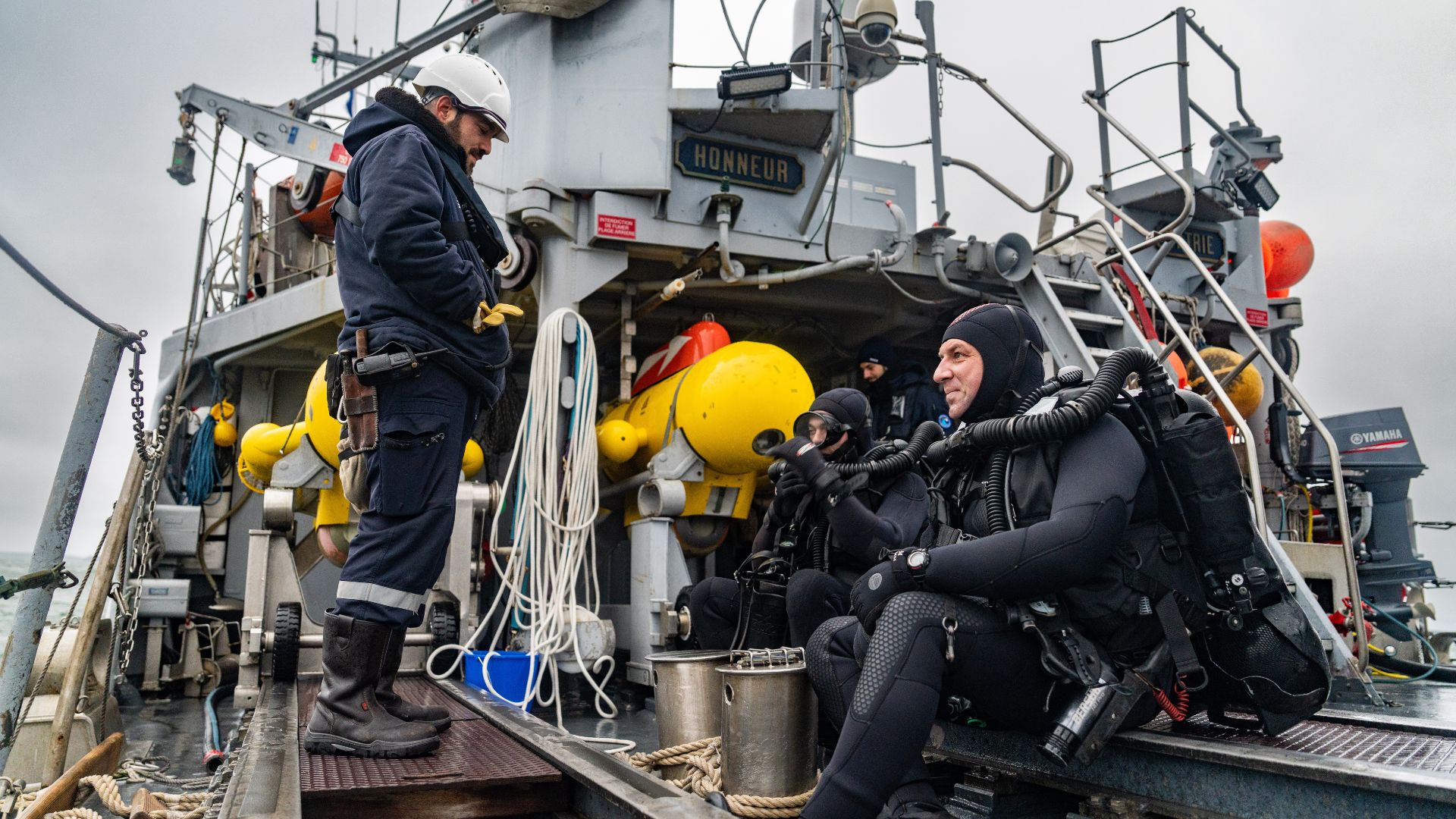
Sweeping the Baltic: What NATO’s Mine Operations Mean for Maritime Security
The Baltic Sea is quickly becoming one of Europe’s most complex maritime environments. Once viewed mainly as a dense shipping corridor, it is now a region marked by suspected sabotage, increased drone and submarine activity, and growing tension between NATO states and Russia. For maritime professionals, the message is clear: the seabed is no longer a quiet space — it’s a contested one.
Recent NATO initiatives, including Exercise Freezing Winds and Operation Baltic Sentry, highlight how the Alliance is adapting its mine countermeasure and undersea surveillance capabilities. These operations offer a valuable window into the future of maritime security and what it means for those responsible for protecting vessels, infrastructure and commercial operations.
1. Why the Baltic is now a strategic flashpoint
The region hosts a dense network of energy pipelines, power cables and data links connecting northern and central Europe. Combined with shallow waters, narrow straits and overlapping territorial interests, it forms a natural pressure point for hybrid activity — the kind of below-the-threshold interference that includes GPS jamming, cable damage and uncrewed drone flights.
For anyone operating in or around the Baltic, these characteristics make the area a maritime vulnerability hotspot. Even minor disruptions can echo across energy markets, communications networks and commercial logistics.
2. Exercise Freezing Winds: preparing for real-world complexity
Finland’s Exercise Freezing Winds brought together NATO minehunters, divers and specialist teams to practise operations in harsh winter conditions — conditions that directly affect sonar performance, diver safety and drone endurance.
Three lessons stand out:
Legacy ordnance still matters.
The Baltic seabed is littered with unexploded munitions from past conflicts. Modern mine threats now sit on top of this historical burden, requiring highly refined detection and classification.
Winter is a tactical factor.
Ice, darkness and low temperatures shape operations in ways that don’t occur in temperate waters. Training in these environments ensures readiness for real disruptions.
Interoperability is a core capability.
NATO forces must align communications, decision-making and response procedures. This is essential when reacting to suspected sabotage or mine-laying across multiple national jurisdictions.
3. Operation Baltic Sentry: beyond minehunting to infrastructure defence
Running alongside Freezing Winds, Operation Baltic Sentry focuses on the Øresund Strait — one of the most infrastructure-heavy chokepoints in the region. Surface ships monitor traffic and seabed anomalies, divers and ROVs inspect assets, and maritime patrol aircraft, satellites and uncrewed vessels provide broad surveillance.
This reflects a wider shift: the move from reactive minehunting to persistent undersea domain awareness. In practice, this means knowing what the seabed normally looks like, being able to detect when something changes, and having the tools to investigate quickly.
For operators responsible for offshore cables, pipelines or platforms, this shift mirrors the standards now expected for onshore critical infrastructure: structured mapping, regular monitoring and rapid escalation pathways.
4. The UK’s Atlantic Bastion: a glimpse of future force design
The UK’s new Atlantic Bastion programme combines autonomous vessels, AI-enabled sensors and traditional warships to protect undersea assets. Autonomous platforms act as persistent sentinels, while AI analyses patterns in sensor data, flagging anomalies that human operators might otherwise miss.
This approach offers two major insights:
• Hybrid manned–unmanned forces will become the baseline for undersea security.
• AI’s greatest value lies in filtering vast quantities of data, not replacing human judgment.
As infrastructure dependency grows, commercial operators may increasingly adopt similar layered models — blending traditional security protocols with new technologies for continuous awareness.
5. What this means for maritime and infrastructure professionals
NATO’s evolving posture in the Baltic carries practical implications well beyond the military sphere.
The seabed must be treated as contested terrain.
Pipelines and cables now require the same structured risk management as onshore facilities.
Awareness is as important as response.
Understanding what is happening below the surface — not just reacting to it — is becoming central to resilience.
Hybrid threats are the norm.
Interference may be ambiguous, unattributed or disguised as accidents. Plans must reflect that ambiguity.
Interoperability extends beyond navies.
Commercial operators, coastguards and private security teams will increasingly need shared reporting channels, common terminology and coordinated response frameworks.
Cold-water operations require specialist preparation.
Ice, darkness and complex geography demand training and equipment tailored to northern environments.
6. Questions worth asking in your next risk review
Do we have an accurate map of our undersea assets and dependencies?
How do we currently detect changes on the seabed — and how quickly can we investigate them?
What is our protocol if we suspect deliberate interference but lack immediate proof?
Are our partners aligned on how and when to share technical and incident data?
Should we integrate uncrewed systems or external monitoring to improve our situational awareness?
Conclusion
Exercises like Freezing Winds and operations such as Baltic Sentry show just how rapidly the undersea security landscape is changing. Mine clearance is no longer a standalone task; it now sits within a wider mission of protecting crowded, strategically vital seabed infrastructure.
For maritime professionals, the takeaway is straightforward: the seabed can no longer be treated as background detail. It is a frontline security domain — one that demands continuous awareness, coordinated planning and the ability to interpret subtle changes in a highly contested environment.
Understanding how NATO adapts in the Baltic provides a useful framework for anyone tasked with securing critical assets at or beneath the waterline, whether in northern Europe or beyond.
For more information contact our maritime security team at enquiries@priavosecurity.com.