

What a Residential Security Risk Assessment for High-Value Homes Should Actually Cover
Homes that attract attention are not always the largest. Often, those that signal access, status, or influence are at higher risk. A thorough residential security risk assessment for high-value homes should begin by evaluating exposure, rather than focusing solely on hardware or devices.
We are often invited in after an alarm upgrade or a gate installation. The systems are modern, and the insurance requirements are met, but the question remains: does the property’s security reflect the principal’s profile, lifestyle and visibility?
This distinction is critical.
What “High-Value” Really Means
From a risk perspective, value extends beyond price per square foot. It includes the principal’s profile, public visibility, professional activities, supported causes, involvement in disputes, and the extent of online commentary.
We see properties that are architecturally modest but operationally high risk because of who lives there. We’ve also seen estates worth significant sums that attract limited attention because the principal maintains a low profile and disciplined routines.
A residential security risk assessment for high-value homes begins with context. Who is the principal? What motivates interest? How easy is it to identify the property from public sources? What assumptions might an outsider make about what is inside?
Without this context, perimeter analysis remains superficial.
Perimeter and Access Vulnerabilities
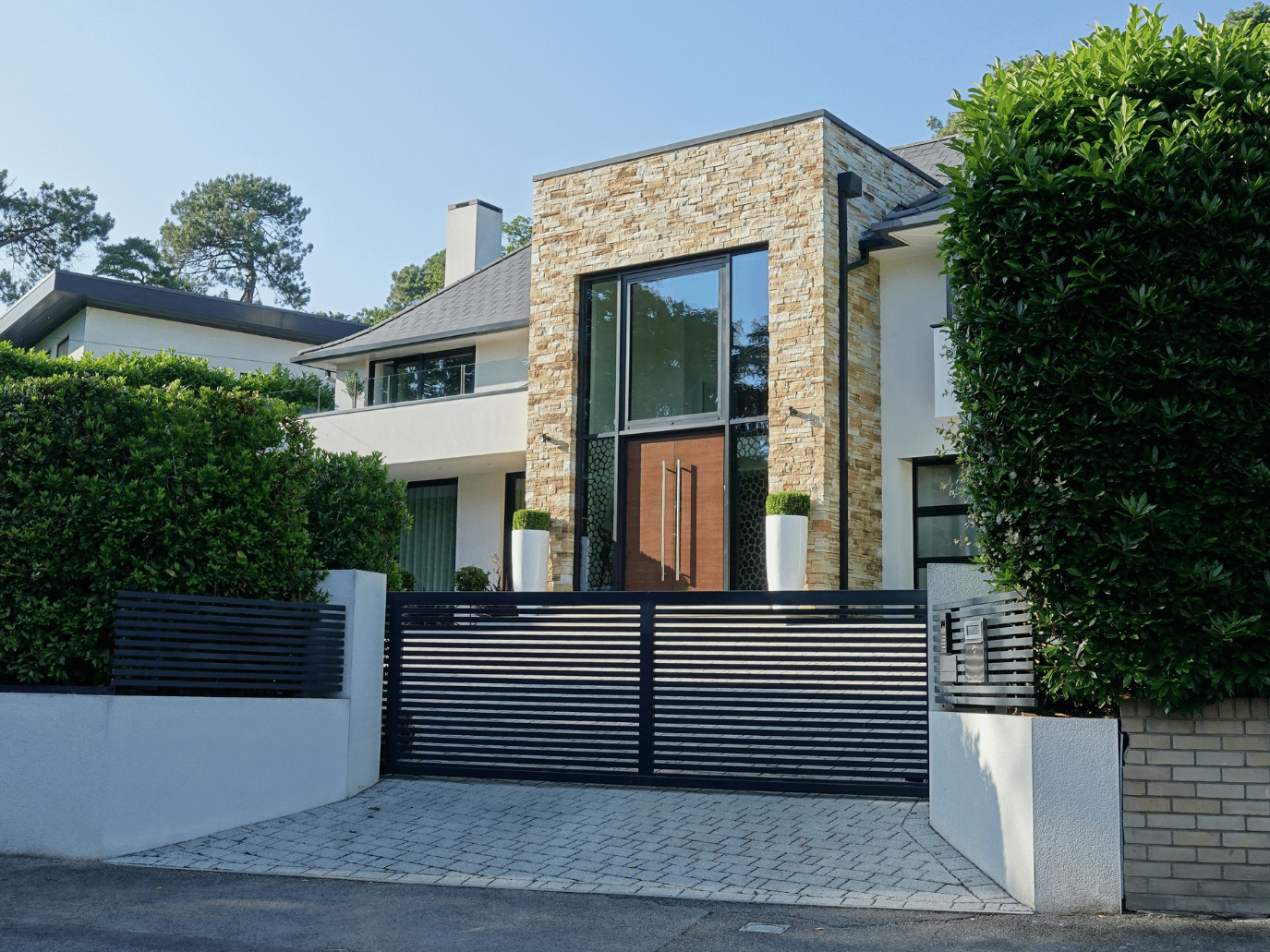
Perimeter review requires more than a checklist approach. We assess sight lines from public roads, footpaths, and neighbouring buildings, evaluate how long the property can be observed without challenge, and measure vehicle approach and departure times.
A tall wall is ineffective if it creates blind spots. Dense hedging can obscure views for both residents and intruders, and architectural lighting may still leave approach angles in shadow.
Access points require similar attention. Main gates, service entrances, and pedestrian side doors are often vulnerable. Incident reviews frequently reveal that entry occurred through unsecured access points, such as side gates left open for tradespeople.
For example, one estate had a secure main entrance and a visible camera, but a secondary staff driveway that was rarely monitored. Although no breach had occurred, the locally known route created a clear security gap.
A residential security risk assessment for high-value homes should identify such inconsistencies to better align risk and response, rather than criticise design.
Internal Zoning and Movement
Within the property boundary, the focus shifts from intrusion to control.
How does movement flow within the home? Are there protected spaces? Can parts of the residence be isolated if required? Does the alarm system support zoned response, or is it all-or-nothing?
Many homes feature advanced technology but lack effective containment measures. For example, a safe room may exist, but access routes pass through open-plan areas with multiple sight lines. Our assessments consider the time required to move between areas and who controls that movement.
The goal is not to turn a residence into a fortress, but to implement a layered security approach. If the outer layer fails, the inner layer should delay, contain, or alert.
A credible residential security risk assessment for high-value homes will test those layers in theory and in practice. How would the household respond at 02:00? Who calls whom? What happens if the principal is travelling and the family remains on site? The answers reveal more than the floor plan.
Staffing and Insider Exposure
Household staff, contractors, and long-term vendors are integral to the residential environment. While most are loyal and professional, risks can arise from their access and familiarity, not just from malicious intent.
We document access to physical keys, alarm codes, and smart home applications. We review the depth of vetting and frequency of re-screening, and assess the extent of information shared through informal conversations.
Insider exposure also involves social engineering, such as tradespeople approached at the gate, informal conversations in local settings, and online profiles that disclose workplace details or suggest property layout and routines.
A residential security risk assessment for high-value homes should examine these human touchpoints. Often, small procedural changes such as role-specific access, compartmentalised information, and clear expectations regarding discretion, can reduce risk without altering the overall culture.
Digital and Smart Home Integration Risks
Modern estates are highly connected, with remote control over gates, cameras, heating, and lighting. However, risks increase when these smart features share the same network or are accessed from personal devices.
We start by mapping the smart home ecosystem, identifying which systems are internet-facing, who has remote access, and whether security systems are segmented from general household devices.
We have seen properties where the entertainment systems and CCTV share a network architecture. It worked well until an external vendor required remote troubleshooting and gained broad visibility across the system.
Digital footprint and security are now integral to residential risk. Online images can reveal layout details, alarm panels, or camera positions, while smart assistants record presence and absence patterns. Automation schedules may also create predictable lighting behaviour that signals occupancy or travel.
A residential security risk assessment for high-value homes must consider digital architecture as part of the perimeter. Often, improvements involve segmentation and governance rather than a complete technical overhaul, with clear control over remote access and regular review of connected devices.
Review and Integration
Residential environments are dynamic. Profiles and staff may change, estate modifications can occur, and in some cases, disputes may attract attention.
A residential security risk assessment for high-value homes should inform a broader protection strategy, including coordination with executive protection teams and alignment with travel planning.
We recommend an annual structured review, as well as additional reviews following significant changes in profile or property use. This is not due to failure, but because lives evolve.
What changes outcomes is not the thickness of the report, it’s judgment – knowing when a pattern has become exposure and when convenience has outpaced control.
The most secure homes are rarely the most visible; they are the most thoughtfully considered.